Top modules

LD2410 vs LD2450: Presence Detection or Position Tracking?

Both are 24GHz Hi-Link radars on a 5V supply, and both plug into ESPHome. The LD2410 tells you a room is occupied; the LD2450 tells you where in the room people are moving.

Revised September 2026
Verdict

Pick the LD2410 if you need reliable occupancy, including people sitting or lying still, at the lowest cost per room. Pick the LD2450 if you need positions: x/y coordinates and speed for up to three moving targets, and rectangular zones such as sofa, desk or doorway.

  • Lights that stay on while you read: LD2410
  • Which side of the room, or which zone: LD2450
  • Both in one room: common, and one ESP32 can read the pair
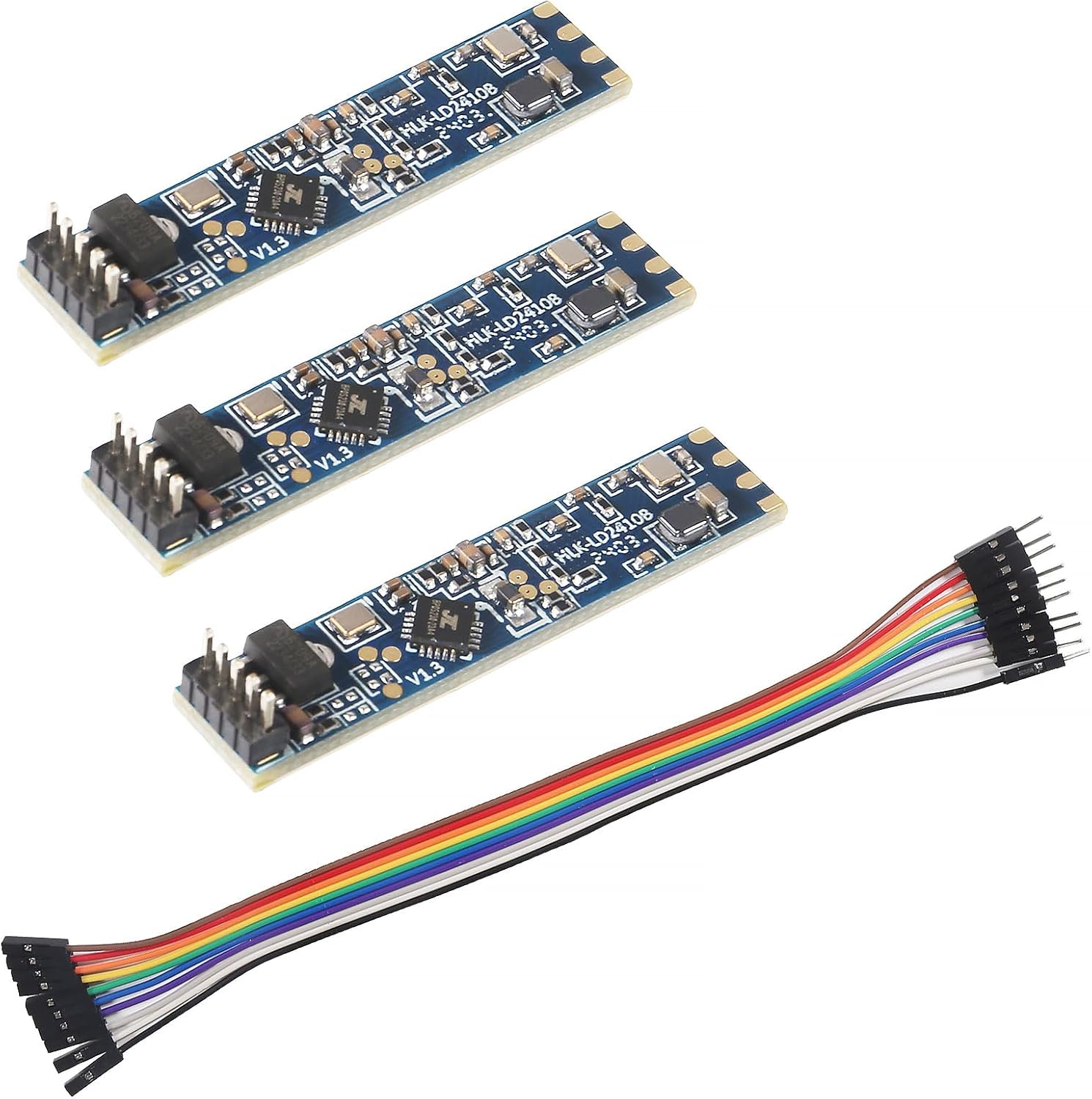
Best LD2410: occupancy1 LD2410C 3-pack
LD2410C 3-pack
Three C modules that hold presence on still, seated people, one per room.
  • LD2410C · 3-pack
  • Bluetooth: tune it from your phone
  • 24GHz radar: sees people sitting still
Get the module

Choose between occupied and positioned

The LD2410 answers one question very well: is anyone in this space? The LD2450 answers a different one: where exactly are the people who are moving, and how fast?

That split comes from what each radar reports. The LD2410 measures range only. It splits the room into distance gates and tells you whether a moving or a still target sits in any of them. The LD2450 adds angle, so it can place each target on an x/y grid in front of the sensor and follow up to three of them at once.

  • LD2410: occupancy for lights, heating and screens. One number that matters: present or not.
  • LD2450: positions for zones, direction of travel and counting who is where.
  • Both: 24GHz FMCW, 5V supply, 256000 baud, Bluetooth tuning through HLKRadarTool.

The price of the extra data is complexity. An LD2410 automation needs one binary sensor. An LD2450 automation starts with coordinates, then zone definitions, then logic that turns targets in zones into states. If a room only needs lights that stay on while you are in it, the tracking radar adds work without adding much.

Rule of thumb: if you would draw your automation as a floor plan, you want the LD2450. If you would draw it as a light switch, you want the LD2410.
Reference

Presence radar and tracking radar spec for spec

LD2410 (B, C)LD2450
Frequency24–24.25GHz FMCW24–24.25GHz FMCW
What it reportsPresence, moving and still distance, gate energyX/Y position, distance, angle and speed per target
TargetsNearest moving and nearest stillUp to 3 moving targets
Still peopleDesigned for it (micro-motion)Built for moving targets; still people can drop out
Rated range5m (0.75–6m adjustable)About 6m in Hi-Link's figures, 8m in the JMT description
Field of view±60°±60° azimuth, ±35° tilt
Zones9 distance gatesUp to 3 rectangular regions
Supply and baud5V, 2560005V, 256000
Presence output pinYes (OUT)Serial output
Bluetooth tuningYes on B, B-P, CYes

From Hi-Link's module documents and the LD2450 module description. Ranges are for moving targets.

Keep a reader's lamp on with the LD2410

Holding presence on someone who barely moves is where the LD2410 earns its place. Its firmware looks for the tiny motion of breathing and posture shifts, and it reports a still target separately from a moving one.

The LD2450 is described by its makers as a trajectory sensor for moving targets. It excels at following people as they walk. When someone sits down and settles, a tracker built around movement can lose them, which shows up as a light switching off during a film.

  • Home office: the desk stays occupied through a long call.
  • Bedroom: presence holds through the night for heating or alarm logic.
  • Bathroom: lights stay on while you stand at the sink.
  • Living room: the TV lights stay on while everyone is on the sofa.

Per-gate still thresholds let you tune exactly the distance where the chair or bed sits. The gates and range guide shows how to find that gate and set it. The LD2410 is also the cheaper radar, and multi-packs of the C bring the per-room cost down further.

If you have tried a PIR sensor and hated the lights going off, the LD2410 is the fix. You do not need position data to solve that problem.

Visualised

Rated reach of three Hi-Link radars

Maximum moving-target range as stated in each module's description. Hi-Link quotes a shorter 6m for the LD2450 in some documents; practical still-detection range is shorter for all three.

Map the room into zones with the LD2450

The LD2450 reports each target's x and y position in millimetres from the sensor, plus its speed and angle. That turns one sensor into several virtual ones.

Define up to three rectangular regions in the sensor itself, or draw as many zones as you like in software from the raw coordinates. Then give each zone its own automation.

  1. Mount the LD2450 on a wall at chest height, facing into the room.
  2. Walk the corners of each zone and note the x/y values.
  3. Create zones for the sofa, the desk, the doorway.
  4. Trigger scenes on a target entering or leaving each zone.
  • Open-plan rooms: kitchen lights for the kitchen side, lamp for the sofa side.
  • Direction: tell someone entering from someone leaving at a doorway.
  • Counting: see how many of up to three people are moving in view.

Tilt coverage is ±35°, narrower than the ±60° side to side, so height and aim matter more than on an LD2410. Hi-Link's figures give it about 6m of reach; the JMT description quotes 8m.

Many makers end up using both in busy rooms: the LD2450 for zones, the LD2410 as the reliable is-anyone-here signal that keeps lights on when the tracker loses a still person.

Recommended

Add position tracking to a presence build

JMT HLK-LD2450 Tracking Sensor
Best for knowing where in the room JMT HLK-LD2450 Tracking Sensor

The JMT HLK-LD2450 tracks moving people with distance, angle and speed, across ±60° horizontally and ±35° vertically. Pair it with an LD2410 when you want zones and rock-solid still presence in the same room.

Get the module

Line up LD2410, LD2420 and LD2450

The LD2420 often comes up in the same breath. It is another Hi-Link presence radar, smaller and running from 3.3V, with detection rated out to 8m in its module description.

LD2410LD2420LD2450
JobPresence, incl. stillPresence, incl. stillPosition tracking
Supply5V3.3V5V
Default baud256000115200 (firmware 1.5.3+)256000
BluetoothB, B-P, CNoYes
ESPHomeld2410 componentld2420 componentld2450 component

The LD2420's small size and 3.3V rail make it attractive for compact boards, while the LD2410's Bluetooth tuning makes it the friendlier first radar.

  • Pick the LD2410 for the easiest setup and phone tuning.
  • Pick the LD2420 when the board must be tiny or the rail is 3.3V only.
  • Pick the LD2450 when positions matter.

The LD2420 is the closest substitute for an LD2410; the LD2450 is a different tool for a different job. The LD2410 vs LD2420 comparison goes into firmware versions, size and false-trigger behaviour, and also covers the LD2412, LD1125H and Seeed's MR24HPC1.

All three share the 24GHz ISM band, so a mixed setup in one house is normal. Keep sensors from staring straight at each other across a room, and tune each one with the others running.

Board comparison

LD2410 boards to set against an LD2450

LD2410C 3-pack LD2410C 3-pack LD2410C single module LD2410C single module LD2410B Bluetooth module LD2410B Bluetooth module AKAMATIS Presence Sensor v2.2 AKAMATIS Presence Sensor v2.2
TypeModuleModuleModuleReady-made sensor
VersionLD2410CLD2410CLD2410BLD2410B
Pack3-pack1 module3-pack1 module
BluetoothYesYesYesYes
Cable——Yes—
Get the module Get the module Get the module Get the module
Datasheet

Every spec of the top boards

LD2410C 3-pack
LD2410C 3-pack
Model
HLK-LD2410C
Frequency band
24GHz ISM (24.125GHz centre)
Radar type
FMCW (frequency-modulated continuous wave)
Detects
Moving, still, micro-motion, seated and lying people
Maximum sensing distance
5m (some packs quote up to 6m)
Distance resolution
0.75m per gate
Detection angle
±60°
Supply voltage
5V
Logic level
3.3V UART and OUT pin
Interfaces
GPIO (OUT pin) and UART
Default baud rate
256000, 8N1
Header
5 pins at 2.54mm pitch
Module notes →Get the module

Run both radars from one ESP32

Recent ESPHome releases include an ld2450 component alongside ld2410, and a classic ESP32 has enough hardware UARTs to read both sensors at 256000 baud.

uart:
  - id: uart_ld2410
    rx_pin: GPIO16
    tx_pin: GPIO17
    baud_rate: 256000
  - id: uart_ld2450
    rx_pin: GPIO26
    tx_pin: GPIO27
    baud_rate: 256000

ld2410:
  uart_id: uart_ld2410

ld2450:
  uart_id: uart_ld2450

Each sensor gets its own UART, and both take 5V from the board's 5V pin; budget a supply that covers two radars plus the ESP32's Wi-Fi. The LD2450 is a serial sensor, so plan on the UART for it rather than a presence pin.

  • Point both sensors the same way from the same wall so their views overlap.
  • Use the LD2410's still target to hold room occupancy.
  • Use LD2450 zones for which-area-is-busy logic.
  • Check ESPHome's docs for the exact ld2450 entity keys in your release.

Full LD2410 YAML with entities and engineering mode lives in the ESPHome walkthrough, and pin order for each LD2410 board is on the pinout reference.

Tune them in order. Set the LD2410's gates first so the room reads empty when it is empty, then define LD2450 zones with the LD2410 already quiet. Home Assistant can then combine the two: room occupied from the LD2410, and the active zone from the LD2450, with a template sensor that falls back to occupied whenever the tracker loses someone who is sitting still.

No appetite for flashing firmware? Finished Zigbee and Wi-Fi presence sensors with zone settings exist as well; they trade the DIY flexibility for a case and a ready app.

Troubleshooting

Common snags

Is the LD2450 better than the LD2410?

It does a different job. The LD2450 tracks where moving people are; the LD2410 is better at holding presence on people who sit still.

Can the LD2450 detect a person sitting still?

It is built as a trajectory sensor for moving targets, so a motionless person can drop out. Many builds add an LD2410 for still presence.

Does the LD2410 give position or zones?

Only distance, split into nine gates. It has no angle data, so left and right zones need the LD2450.

LD2410 vs LD2420 vs LD2450: which should I buy?

LD2410 for general occupancy with phone tuning, LD2420 for a tiny 3.3V presence sensor, LD2450 for position tracking and zones.

Can one ESP32 run an LD2410 and an LD2450 together?

Yes. Give each its own hardware UART at 256000 baud and power both from 5V.

Next build step

Continue the build

Parts bin

Other boards for the job

Beyond the LD2410

Need tracking or a finished sensor?

Neighbours of the LD2410: the LD2450 that follows people around a room, the tiny 3.3V LD2420, and finished Zigbee and Wi-Fi presence sensors.

Best LD2410