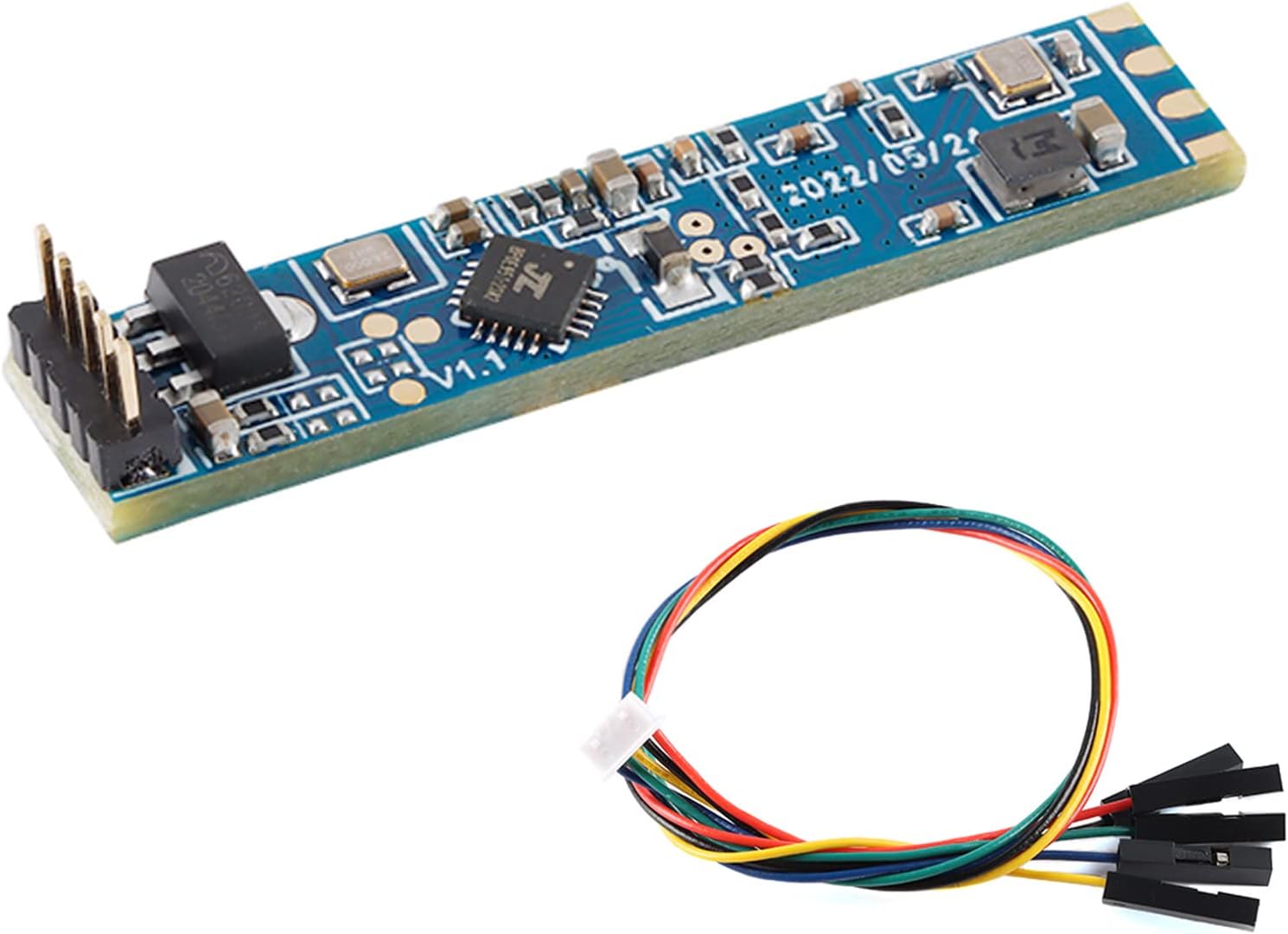
Top modules

LD2410 vs LD2410C vs LD2410B vs LD2410S: Which Version to Buy

Same radar family, different boards. The letter after LD2410 tells you the footprint, whether it has Bluetooth, and in the S's case a completely different power budget.

Revised September 2026
Verdict

Pick the LD2410C for most builds: 2.54mm pitch, Bluetooth tuning and multi-packs. Pick the LD2410B (or B-P with pins) when you need the slim 7x35mm board with Bluetooth. Pick the original LD2410 only for serial-configured, space-tight jobs. Pick the LD2410S when the sensor must run on batteries at 3.3V.

  • LD2410, B and C share 5V power, 256000 baud and the ESPHome ld2410 component
  • The S uses 3.3V, 115200 baud and its own protocol
  • The D and AA are newer members for ceilings and longer rooms
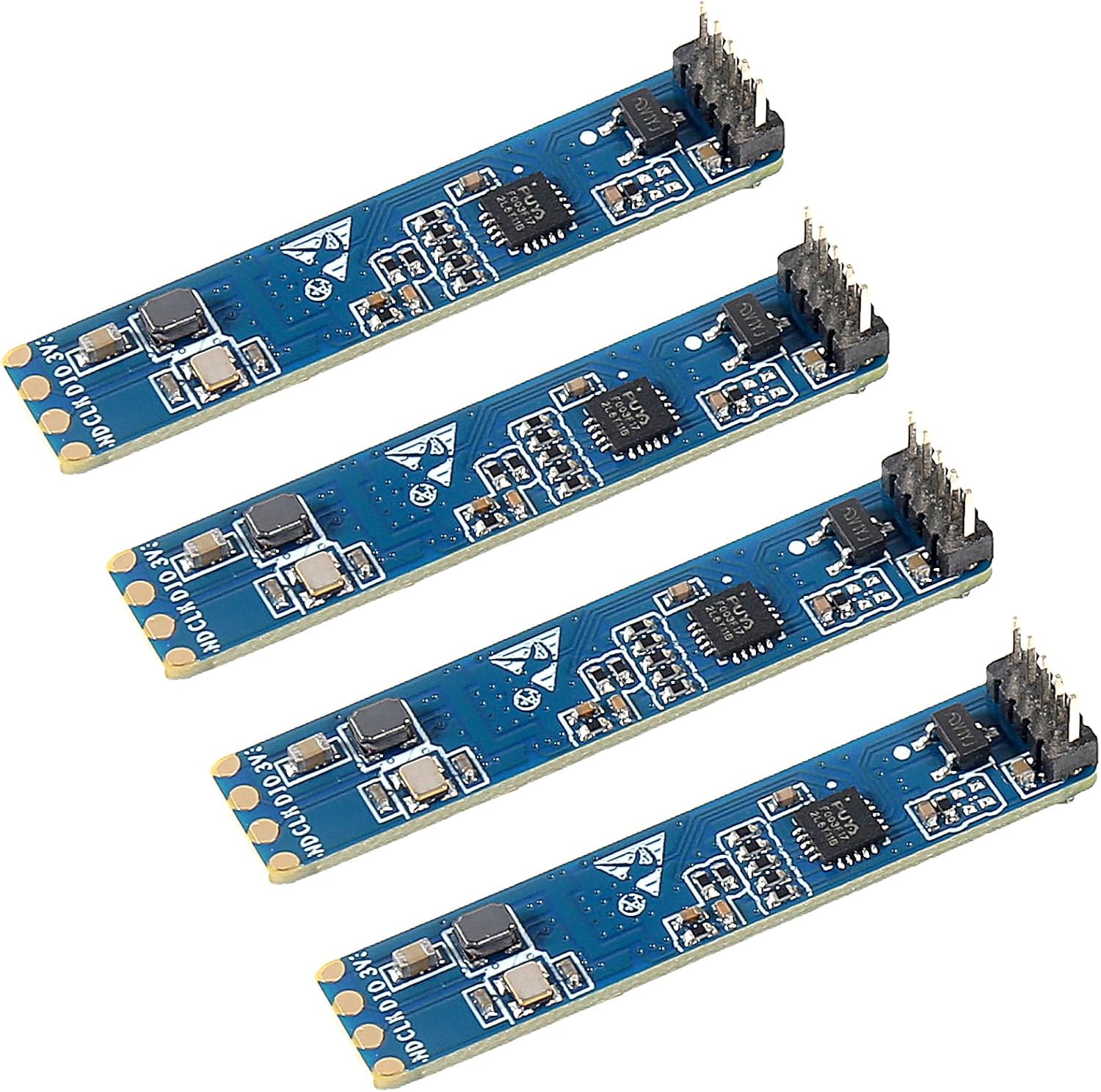
The default C, house-sized1 LD2410C 4-pack
LD2410C 4-pack
Four C modules: 2.54mm pitch, Bluetooth tuning, one per room.
  • LD2410C · 4-pack
  • Bluetooth: tune it from your phone
  • 24GHz radar: sees people sitting still
Get the module
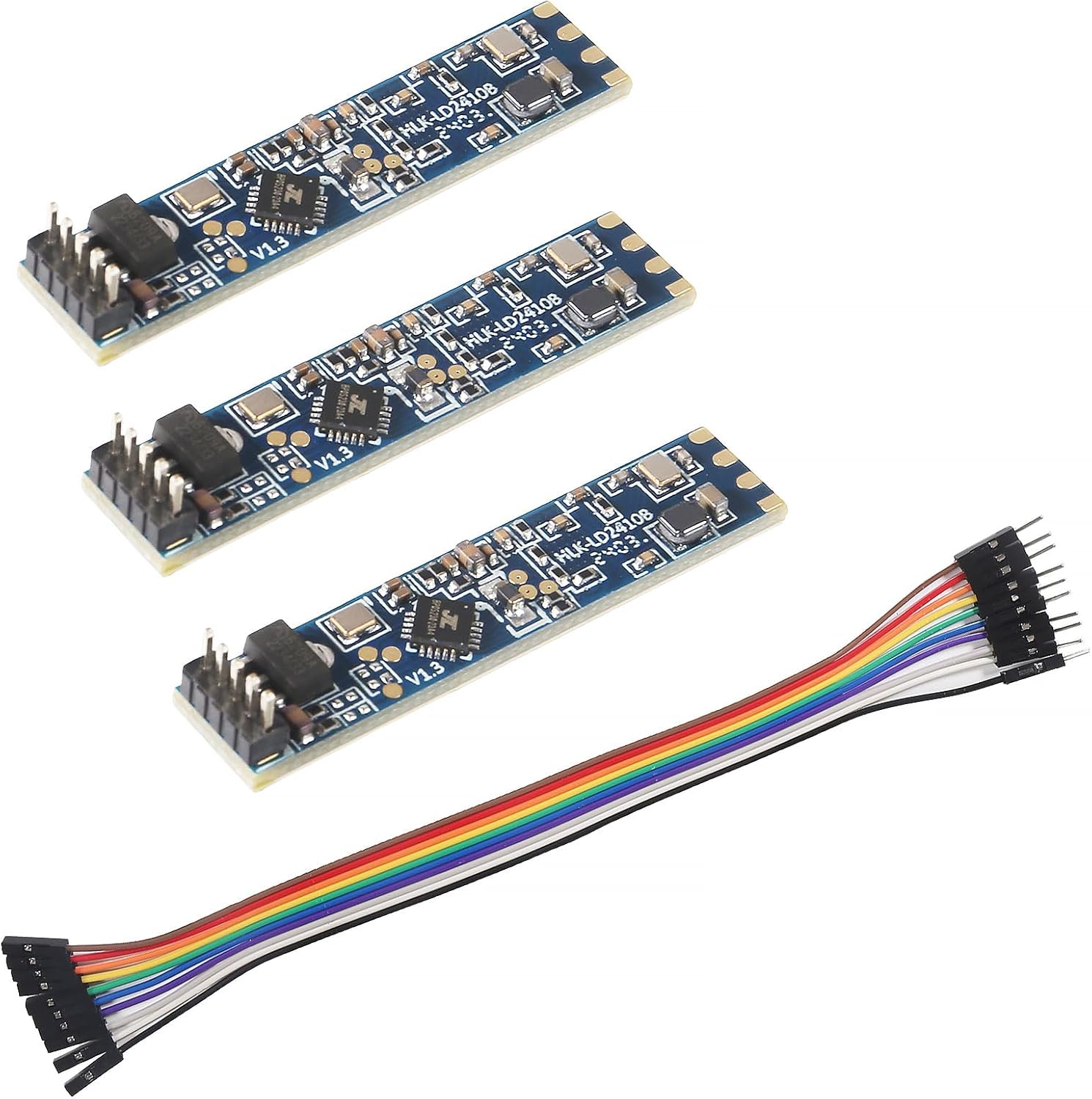
Slim B with Bluetooth2 LD2410B Bluetooth module
LD2410B Bluetooth module
Three 7x35mm B boards with 10-pin cables, so the fine pads need no solder.
  • LD2410B · 3-pack
  • Bluetooth: tune it from your phone
  • Cable included
Get the module

Start with the LD2410C for most builds

The LD2410C is the version most makers end up with, and for good reasons. It keeps the LD2410's radar and firmware features, adds Bluetooth, and moves the pins to the standard 2.54mm pitch.

That pitch is the practical win. A normal header solders straight in, and ordinary Dupont jumpers or a breadboard do the rest. The board is 16x22mm, squarer than the original, and fits neatly beside a small ESP32 board.

  • Bluetooth: tune gates and timeout from the HLKRadarTool app before and after installation.
  • 2.54mm pitch: no fine-pitch cable or adapter.
  • Same electrics: 5V supply, 3.3V logic, 256000 baud, about 80mA average.
  • ESPHome: the built-in ld2410 component treats it exactly like the others.

Watch one difference: the C's pin order starts with TX at pin 1, then RX, OUT, GND, VCC. Diagrams drawn for the original or the B start with OUT. Rewire from the pinout reference, not from an old photo.

LD2410 vs LD2410C in one line: same radar, but the C adds Bluetooth and breadboard-friendly pins.

Multi-packs of the C make whole-house builds cheap per room, and identical modules mean one config and one tuning routine for every room.

Reference

Original, B, B-P, C and S side by side

LD2410LD2410BLD2410B-PLD2410CLD2410S
Board7 x 35mm7 x 35mm7 x 35mm, pins fitted16 x 22mmOwn layout
Pin pitch1.27mm1.27mmHeader soldered2.54mmSee S manual
Pin 1OUTOUTOUTUART TX3V3
Supply5V5V5V5V3.0–3.6V
Average currentAbout 80mAAbout 80mAAbout 80mAAbout 80mAAbout 0.1mA at 1Hz reporting
BluetoothNoYesYesYesNo
Default baud256000256000256000256000115200
Rated range, moving5m5m5m5m8m (4m still)
ESPHomeBuilt-in ld2410Built-in ld2410Built-in ld2410Built-in ld2410Community component

From Hi-Link's module manuals and the module descriptions. Radio figures (24GHz FMCW, ±60°, 0.75m gates) are shared by the 5V boards.

Choose the LD2410B for slim mounts

The LD2410B is the original's 7x35mm strip with Bluetooth added. If you need the narrow board, for a wall plate, a light fitting or a thin bezel, and still want phone tuning, this is the version.

The catch is the connector. The B's five pads sit at 1.27mm pitch, half the usual spacing. Many B modules come with a fine-pitch cable, and the B-P arrives with a header already soldered, which removes the issue entirely.

  • LD2410B: bare board, Bluetooth, 1.27mm pads; usually with a cable.
  • LD2410B-P: the same B with pins fitted, ready for jumpers.
  • LD2410B test kit: the B on a carrier board with cable, for PC and app testing.

Pin order matches the original: OUT, TX, RX, GND, VCC from pin 1. Electrically it is the same as the C: 5V supply, 3.3V logic and 256000 baud. It shares the ESPHome ld2410 component too, and its Bluetooth also works with Home Assistant's LD2410 BLE integration.

You needPick
Narrow board, phone tuningLD2410B
Narrow board, breadboard pinsLD2410B-P
See it work on a PC firstLD2410B test kit

LD2410 vs LD2410B is a Bluetooth question. Same board, same pins; the B adds the radio for tuning without wires.

Visualised

Rated moving range by version

Maximum moving-target range from Hi-Link's documents and the module descriptions. Still-person range is shorter on every version.

Keep the original LD2410 for serial-only jobs

The original LD2410 is the board Hi-Link's first manual describes: 7x35mm, five pads at 1.27mm, no Bluetooth. Everything is configured over the serial port.

That makes it a good fit when the sensor lives on an ESP32 permanently and ESPHome handles all tuning. Without a radio, nobody nearby can connect to it with a phone app. Its 1.27mm pads need a fine-pitch cable, and many originals come with one that adapts to 2.54mm Dupont jumpers.

  • Configure with Hi-Link's PC tool through a USB-serial adapter, or through ESPHome.
  • Same radar performance as the B and C: 5m rated, ±60°, 0.75m gates.
  • Pin order: OUT, TX, RX, GND, VCC.

Searches for HLK-LD2410 V1.3 usually point at the original's product manual, revision V1.03 from June 2022, or at a revision number printed on a board. The revisions refine wording and data; the pin table, 5V supply and 256000-baud default stay the same. The firmware version is a different number, readable over serial and shown by ESPHome's version sensor.

If you already own originals, they are fully usable. For a new purchase, the C gives the same radar with Bluetooth and easier pins, so the original makes sense mainly where its slim strip shape or radio-free design is the point. The datasheet guide translates the original's spec table line by line.

Recommended

Get the slim B with pins already fitted

LD2410B-P module
Best B for breadboards LD2410B-P module

The LD2410B-P is the Bluetooth B with its header already soldered on. You get the slim board and phone tuning without fighting 1.27mm pads.

Get the module

Move to the LD2410S for battery power

The LD2410S shares the name and the 24GHz band, but it is a different design. Hi-Link built it for ultra-low power: a 3.0–3.6V supply and an average current around 0.1mA when it reports once a second.

That is several hundred times less than the 5V boards' average, which is what makes months on batteries realistic. It is also rated further: up to 8m for a moving person and 4m for a still one.

  • Pins: 3V3, GND, OT1 (serial TX), RX, OT2 (presence output).
  • Serial: 115200 baud with its own protocol, not the LD2410's frames.
  • Bluetooth: none.
  • ESPHome: not the built-in ld2410 component; community components exist.

So it is not a drop-in replacement. Code, wiring and configuration tools written for the LD2410 do not carry over. The payoff comes when you pair it with a sleeping microcontroller: the S watches the room on a trickle of current and raises OT2 to wake the controller when someone arrives.

LD2410 vs LD2410S: pick the 5V boards for mains-powered rooms and easy ESPHome; pick the S only when batteries or a 3.3V-only rail force the choice.

More on the S's power budget is in the LD2410S module notes, and the maths for the 5V boards is on the pinout and power page.

Board comparison

Every LD2410 version in one table

LD2410C 3-pack LD2410C 3-pack LD2410B Bluetooth module LD2410B Bluetooth module LD2410B-P module LD2410B-P module LD2410 original module LD2410 original module LD2410S low-power module LD2410S low-power module LD2410D module LD2410D module
TypeModuleModuleModuleModuleModuleModule
VersionLD2410CLD2410BLD2410B-PLD2410LD2410SLD2410D
Pack3-pack3-pack1 module1 module1 module4-pack
BluetoothYesYesYes———
Cable—Yes—Yes——
Get the module Get the module Get the module Get the module Get the module Get the module
Datasheet

Every spec of the top boards

LD2410C 4-pack
LD2410C 4-pack
Model
HLK-LD2410C
Frequency band
24GHz ISM (24.125GHz centre)
Radar type
FMCW (frequency-modulated continuous wave)
Detects
Moving, still, micro-motion, seated and lying people
Maximum sensing distance
5m (some packs quote up to 6m)
Distance resolution
0.75m per gate
Detection angle
±60°
Supply voltage
5V
Logic level
3.3V UART and OUT pin
Interfaces
GPIO (OUT pin) and UART
Default baud rate
256000, 8N1
Header
5 pins at 2.54mm pitch
Module notes →Get the module
LD2410B Bluetooth module
Model
HLK-LD2410B
Frequency band
24GHz ISM
Radar type
FMCW
Detects
Moving and stationary people, with target distance
Maximum sensing distance
5m
Distance resolution
0.75m per gate
Coverage
±60°
Board size
7 × 35mm
Supply voltage
5V
Logic level
3.3V UART and OUT pin
Interfaces
UART and GPIO (OUT pin)
Default baud rate
256000, 8N1
Module notes →Get the module
LD2410S low-power module
Model
HLK-LD2410S
Frequency band
24GHz ISM
Detects
Moving and stationary people
Range, moving people
0.2–8m
Range, stationary people
0.2–4m
Measurement accuracy
±12.5%
Supply voltage
3.3V nominal
Maximum supply voltage
3.6V
Rated current
0.1mA (low-power operation)
Interfaces
UART and GPIO
Configurable
Detection range and reporting frequency
Protocol
LD2410S-specific; not the LD2410B/C command set
Module notes →Get the module

Place the D and AA in the family

Two newer letters now turn up alongside the familiar ones. The LD2410D and the LD2410-AA both target stationary presence, but they are built for different rooms.

The LD2410D is described as a streamlined stationary presence sensor. Mounted on a 3m ceiling, it covers a cone with a 4m base radius; on a wall at 1.5–2m it reaches 6m within ±60°. It comes in multi-packs aimed at repeat installs.

The LD2410-AA is rated for moving people out to 9m, with ceiling mounts up to 6m, and offers GPIO and UART interfaces. Its maker describes parameter tuning over Bluetooth or serial. Treat both as their own products: check the module documents for pinout, baud and protocol before assuming LD2410 compatibility.

  1. Most rooms, ESPHome: LD2410C.
  2. Slim mount, phone tuning: LD2410B or B-P.
  3. Serial-only, space-tight: original LD2410.
  4. Batteries: LD2410S.
  5. High ceilings or long halls: LD2410-AA, then the D.

Beyond the family, the LD2420 and LD2450 solve other problems: a smaller 3.3V presence radar, and position tracking. Those comparisons live in LD2410 vs LD2420 and LD2410 vs LD2450.

Whichever letter you choose, buy one spare. Radar tuning goes faster when you can test a setting on the bench while the first sensor keeps working on the wall.

Troubleshooting

Common snags

LD2410 or LD2410C: what separates them?

Same radar and electrics. The C adds Bluetooth, uses a 16x22mm board with 2.54mm pitch and has a different pin order starting with TX.

LD2410 vs LD2410B: what changes?

The B adds Bluetooth for app tuning on the same 7x35mm board with the same pin order. The B-P is a B with pins fitted.

Is the LD2410S a drop-in replacement?

No. It runs on 3.3V at 115200 baud with its own protocol, and the built-in ESPHome ld2410 component does not support it.

What does HLK-LD2410 V1.3 mean?

Usually the manual revision V1.03 or a board revision. The pinout and 5V, 256000-baud basics do not change between revisions.

Which LD2410 version is best for Home Assistant?

The LD2410C: native ESPHome support, Bluetooth tuning and standard 2.54mm pins.

Next build step

Continue the build

Parts bin

Other boards for the job

Best LD2410